
A genetic network is simply a group of DNA matches, and is the basis for all genetic genealogy work. These networks can be explored using DNA test results. Just two people who share DNA make up a network, although it is much more useful when it has many people.
There are many ways to find and represent a genetic network. On Ancestry, shared matches are genetic networks that can be visualized with different coloured dots. (1) Other sites use the terms “relatives in common” or “in common with” to designate networks. A manual Leeds (2) or an automatic match clustering tool (3) will also show genetic networks. The automatic tool can be used at Gedmatch (4), along with the tools “people who match one of two kits” (5) and triangulation (6). Finally, Rootsfinder (7) visualizes genetic networks.
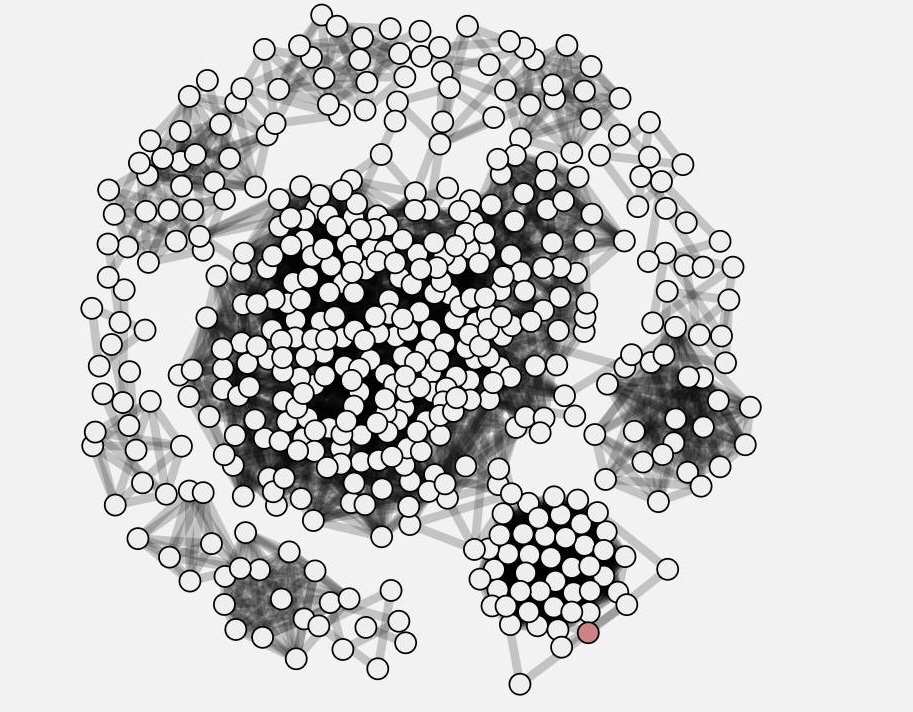
Finding and visualizing genetic networks is important because everyone in a genetic network might share a common ancestor, although caution is warranted until proven. The hypothesis is that A, B, and C share a common ancestor. However, it is possible that person A shares an ancestor with person B, a different ancestor with person C, and B and C share another different ancestor.
It is also possible to share more than one common ancestor, which often happens because of pedigree collapse or endogamy. Overlapping genetic networks are harder to work with due to their complexity.
Having distinct groups of matches makes it easier to situate matches within the network. For example, if two people share a singular MRCA (11), anyone in this genetic network with them are on the branch of the family tree that they share.
This also works in the case of adoptees looking for biological family. An adoptee can use WATO (13) to get relationship possibilities once they have discovered the MRCA of a network.
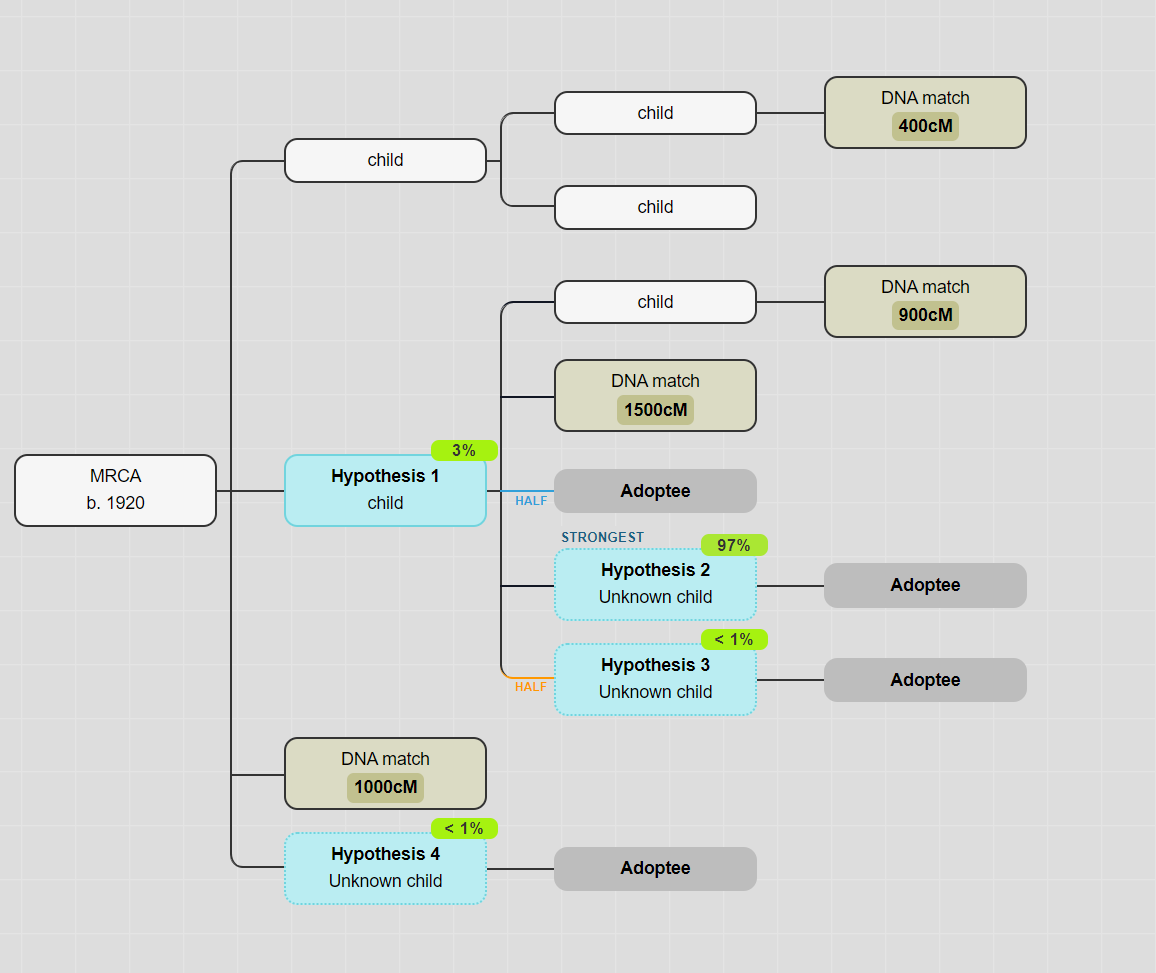
Understanding genetic networks can further genealogy research and help solve mysteries. Unidentified networks can point to places where a documentary tree does not line up with a biological one. Sorting DNA matches into genetic networks should be the first step upon receiving DNA test results (15). The many tools available make this seemingly complex task quite simple.
All websites were viewed 29 July 2024
- Dana Leeds, “The Leeds Method with Ancestry.com’s Colored Dots,” Genealogy With Dana Leeds, 19 May 2019 (https://www.danaleeds.com/the-leeds-method-with-dots/).
- Dana Leeds, “DNA Color Clustering: The Leeds Method for Easily Visualizing Matches,” Genealogy With Dana Leeds, 23 August 2018 (https://www.danaleeds.com/dna-color-clustering-the-leeds-method-for-easily-visualizing-matches/).
- Jennifer Wiebe, “Clustering at Genetic Affairs,” Jennealogie, 24 January 2019 (https://jennealogie.com/2019/01/24/clustering-at-genetic-affairs/).
- Gedmatch (https://www.gedmatch.com/).
- Jennifer Wiebe, “Gedmatch basics: people who match one of two kits,” Jennealogie, 21 March 2018 (https://jennealogie.com/2018/03/21/gedmatch-basics-people-who-match-one-of-two-kits/).
- Jennifer Wiebe, “Triangulation,” Jennealogie, 24 February 2018 (https://jennealogie.com/2018/02/24/triangulation/).
- Jennifer Wiebe, “Painting your matches with RootsFinder,” Jennealogie, 27 February 2018 (https://jennealogie.com/2018/02/27/painting-your-matches-with-rootsfinder/).
- Jennifer Wiebe, screenshot from Rootsfinder, Jennealogie (https://jennealogie.com/2018/02/27/painting-your-matches-with-rootsfinder/).
- Jennifer Wiebe, Hypothesis vs. Reality, July 2024, author’s files.
- Jennifer Wiebe, More than one common ancestor, July 2024, author’s files.
- Jennifer Wiebe, “What is a Most Recent Common Ancestor?,” Jennealogie, 10 June 2024 (https://jennealogie.com/2024/06/10/what-is-a-most-recent-common-ancestor/).
- Jennifer Wiebe, Hypothesis for a DNA match, July 2024, author’s files.
- DNA Painter (https://dnapainter.com/tools/probability).
- Jennifer Wiebe, screenshot from WATO, July 2024, author’s files.
- Jennifer Wiebe, “I got my DNA tested, now what?,” Jennealogie, 14 January 2020 (https://jennealogie.com/2020/01/14/i-got-my-dna-tested-now-what/).

 Jennealogie
Leave a reply to Clustering at GEDmatch – Jennealogie Cancel reply