
In my post What is a Cousin? (1) I talked about how cousins are related to each other, so people could understand what “removed” means in terms of genealogy. I even linked to a handy Cousin Calculator (2) so that anyone trying to figure out their relationship to their cousin could easily figure it out. The cousin calculator relies on knowing who your Most Recent Common Ancestor (MRCA) is. Although people who share DNA have many ancestors in common, it’s important to understand is what is meant by the term MRCA.
Simply put, the MRCA is the closest ancestor that two relatives share. My siblings and I share parents, grandparents and great-grandparents, etc. Since our parents are the most closely related to us, they are our MRCA. My cousins and I share grandparents, and great-grandparents, etc. Our grandparents are the most closely related to us, therefore they are our MRCA. It gets a little trickier when the generations are mixed, but if my MRCA with my sibling is my parents, then my MRCA with a child of my sibling is still my parents.
Sometimes an MRCA is more distant, and we really have to hunt to find them.
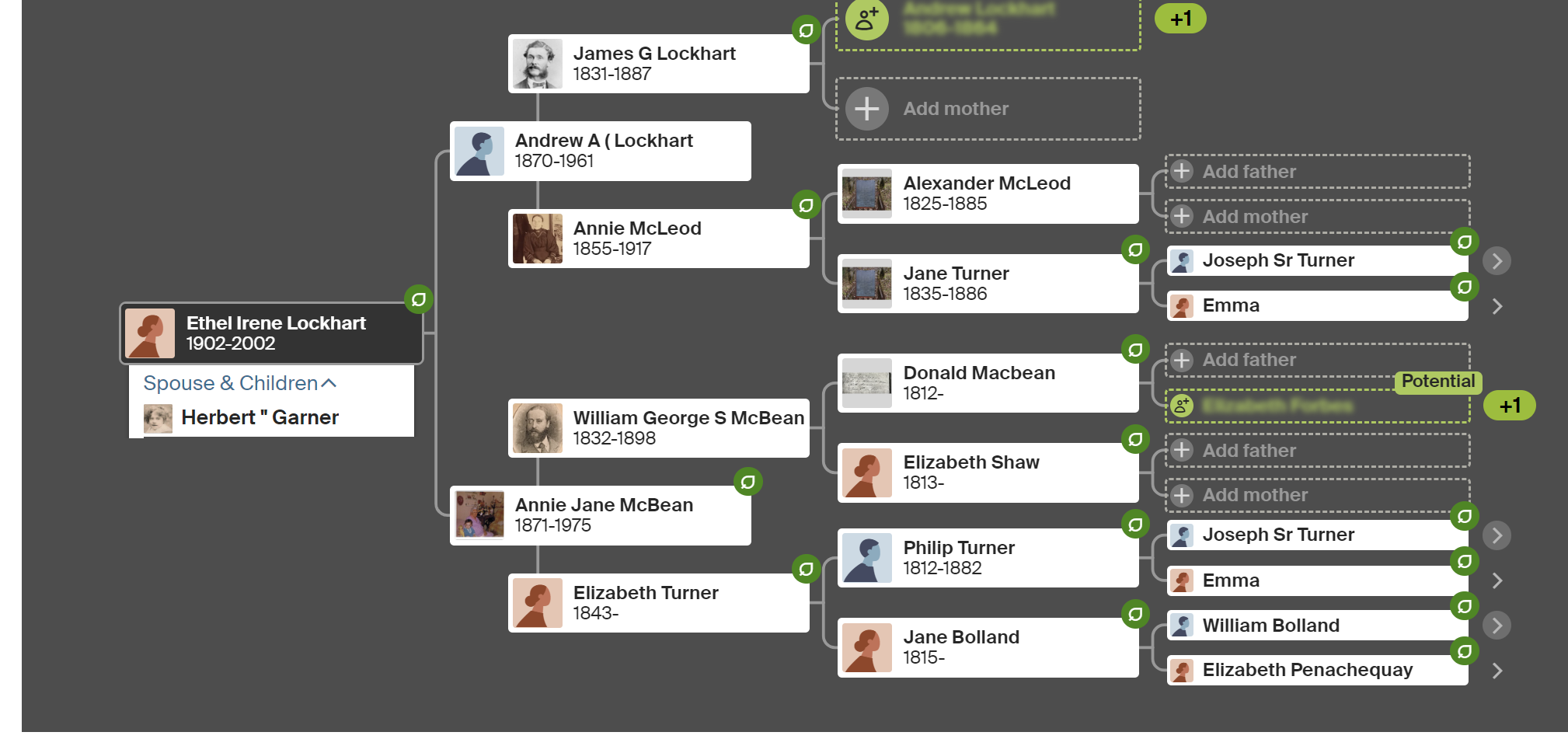
Here is a picture of my great-grandmother’s family tree. She has a number of ancestors.
Here is a picture of the tree of a cousin of my great-grandmother. Can you spot the same people in both trees?
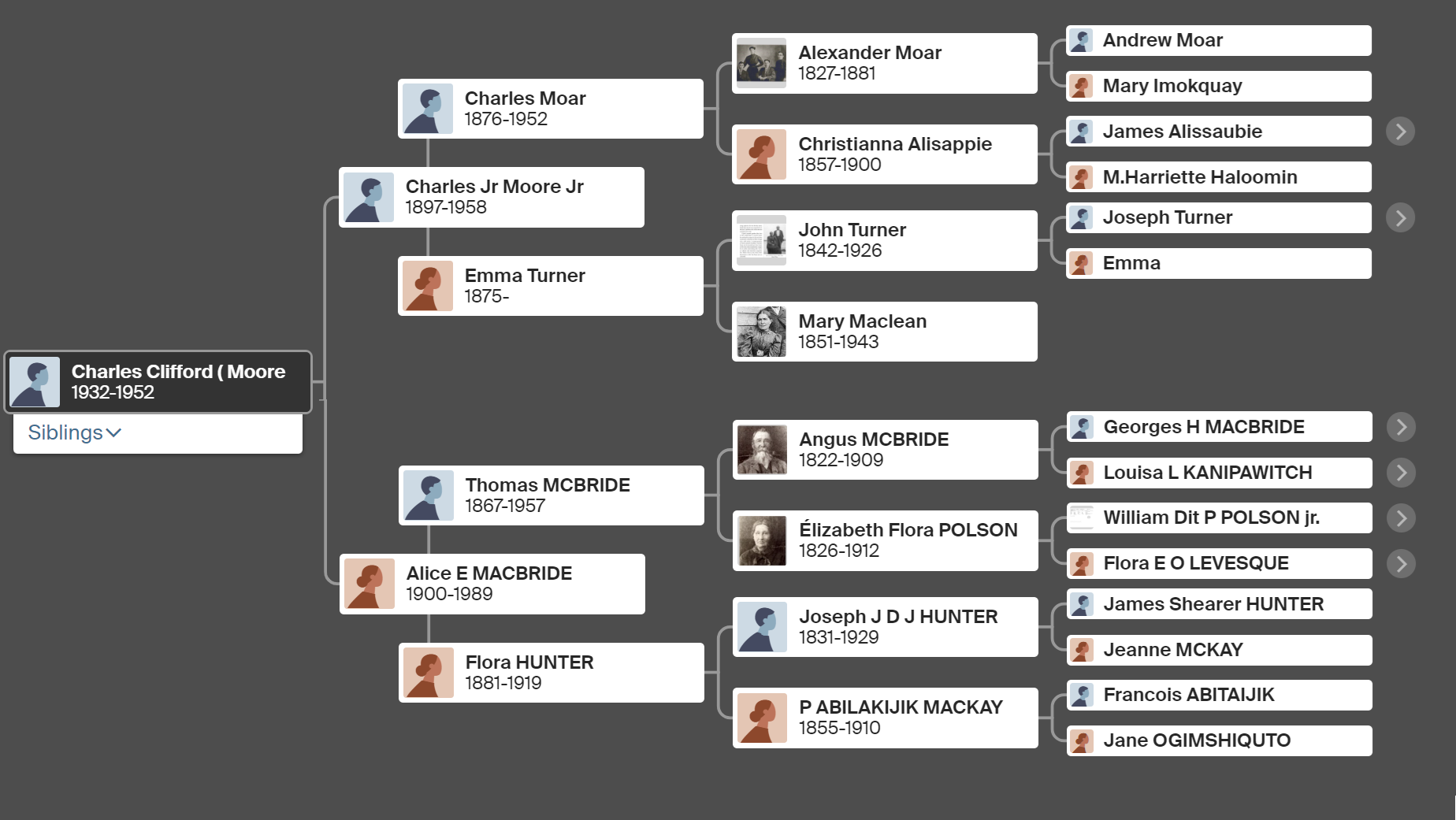
It’s hard to see, but if you look very closely at their trees, you can see the name Turner in each. They share the common ancestor of Joseph Turner and his wife Emma. Any ancestors of Joseph Turner and Emma will also be ancestors that these cousins share, however, Joseph and Emma are the closest to both of them, therefore they are the MRCA.
If I wanted to put this information in the cousin calculator, I would count how far away each of them is from Joseph and Emma. My great-grandmother is their 2x great-grandchild, and so is her cousin. According to the cousin calculator, this makes them 3rd cousins.
What can I do with this information? Well, if you’re going to build a WATO (5), you need to know who the MRCA is for all of the DNA matches you’re putting into the program. If you have a group of DNA matches but you don’t know if or how they’re related to each other, you’ll have to figure that out first before you can use this program.
Tree completeness can be a big problem when you’re trying to figure out an MRCA. You can’t spot a common ancestor or a surname they both share if it’s not in the tree! Sometimes this means you will have to build out the trees for yourself. Sometimes adoptions and non-paternal events mean that someone’s tree may not reflect their biology. However, figuring out how you and a DNA match are connected (or how two or more of your DNA matches are connected) is the first step to using your DNA to solve mysteries.
- Jennifer Wiebe, “What is a cousin?,” Jennealogie, 22 March 2018 (https://jennealogie.com/2018/03/22/what-is-a-cousin/ : accessed 10 June 2024).
- “Cousin Calculator, Relationship Chart & Relationship Definitions,” Ancestor Search, (http://www.searchforancestors.com/utility/cousincalculator.html : accessed 10 June 2024).
- Jennifer Wiebe, digital photo, Family Tree of Ethel, June 2024, author’s files.
- Jennifer Wiebe, digital photo, Family Tree of Charles, June 2024, author’s files.
- Jennifer Wiebe, “WATO for beginners,” Jennealogie, 17 April 2022 (https://jennealogie.com/2022/04/17/wato-for-beginners/ : accessed 10 June 2024).

 Jennealogie
Leave a reply to What is a genetic network? – Jennealogie Cancel reply