
In my post DNA in a Nutshell I mentioned that centimorgans (cM) are a unit of measurement used to measure the amount of DNA you have. The more centimorgans you share with someone, the closer you are related to them. For example, you share around 3500cM with your parents, but only around 880cM with your great-grandparents. Since there’s a range of cMs for various relationships, sometimes it might be hard to pin down the exact relationship you share with an unknown DNA match. This DNApainter Shared cM tool will not only give you the range for each relationship, when you enter a cM amount, it will also tell you which relationship is the most likely. If you’re curious about different kinds of cousins, check out my post What is a Cousin?
The DNA we share with someone is not one long chain, it’s broken up into pieces called segments. First, it is divided between our 22 autosomes, so at the very least it should come in 22 segments. However, since not every part of our DNA is tested (since it’s not useful at this point in time to do so, although there are companies that do it), it’s likely that we’ll share many segments with people. Unlike cM amounts, the amount of segments we share with people doesn’t currently have any hard and fast rules about how it relates to relationships. Presumably if you share a lot of segments with someone, you’ll also share a lot of cMs with them. But let’s imagine a scenario where you have 2 unknown DNA matches. You share the same amount of cMs with both of them but it’s split up into multiple segments for one person and one long segment for the other. It would make sense, especially if it’s a lot of cMs, that the one long segment is a closer relationship because over long periods of time these segments split up. However, we don’t have enough information at this time to know for sure whether or not the amount of segments is meaningful.
How do we know how many cMs we share with a DNA match? Let’s take a look for each company.
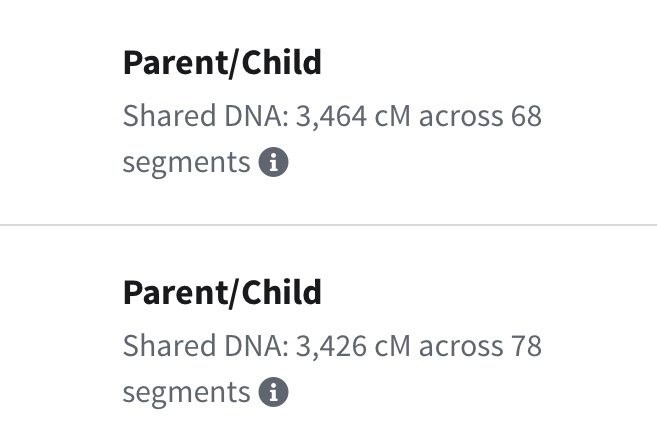
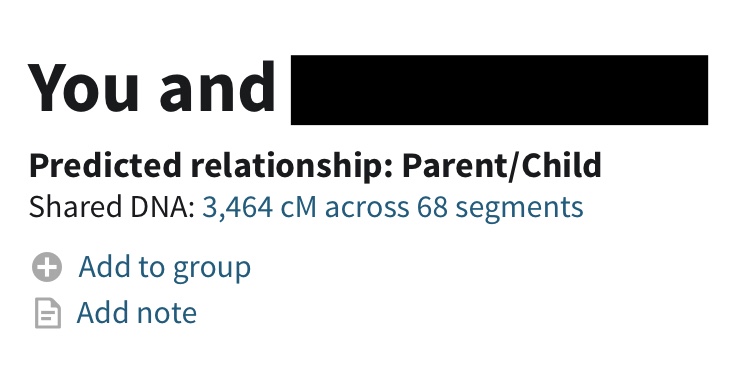
Ancestry used to hide its cMs deep in the match profile, but since their changeover of their DNA page this year it’s much easier to see. Here’s the cM amounts I share with my mom and my dad from the main DNA page:
And if you’re looking for it on the on the match page:
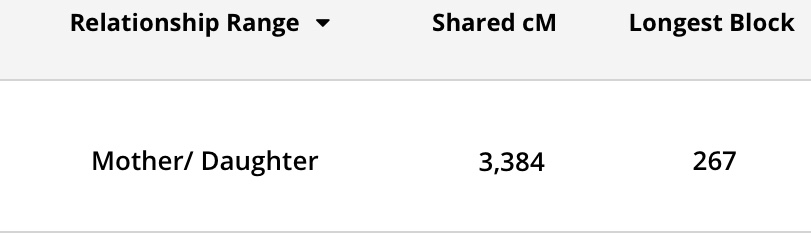
FamilyTree DNA doesn’t give you segment information, but they do include the size of the largest segment. You can use the chromosome browser (I talk more about the FTDNA chromosome browser here) to count the amount of segments you share, but keep in mind FTDNA counts very small segments. Read this post to find out why that’s a problem. You’ll also note that the amount of cMs I share with my mom differs from Ancestry. This is also normal, as each company has their own algorithms for figuring out what counts as shared DNA.
Last, MyHeritage, from the main DNA page:
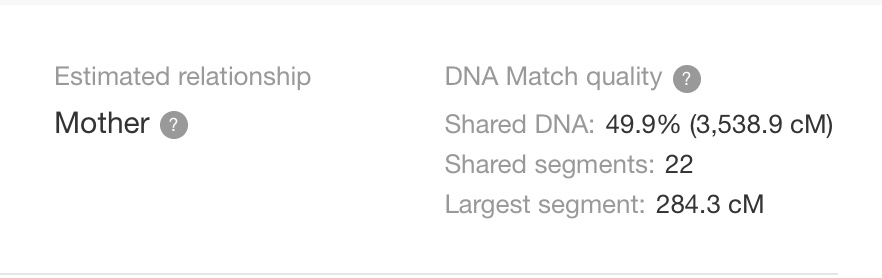
And when you’re reviewing your DNA match:

MyHeritage gives you both the number of segments and the size of the largest segment. They also give you the amount of cMs as a percentage as well as in cMs. I haven’t done my DNA with 23&me, but I do know that they usually give you your DNA as a percentage rather than in cMs. DNApainter Shared cM tool to the rescue!
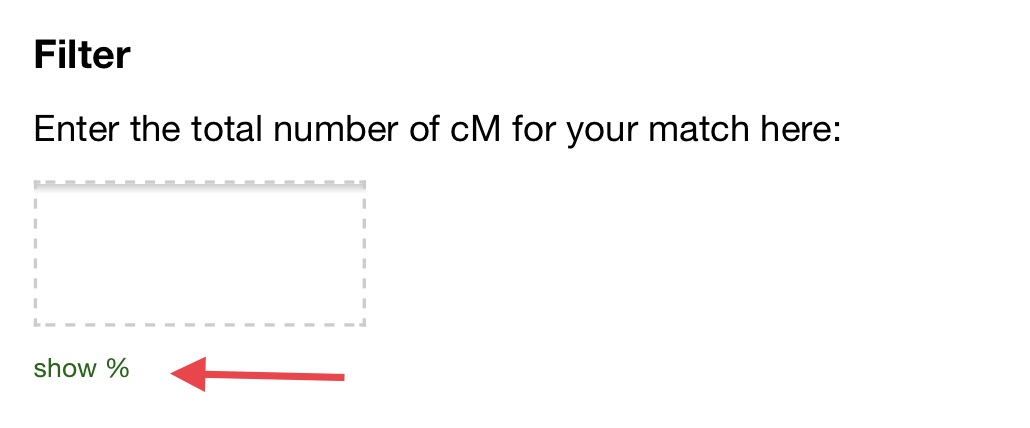
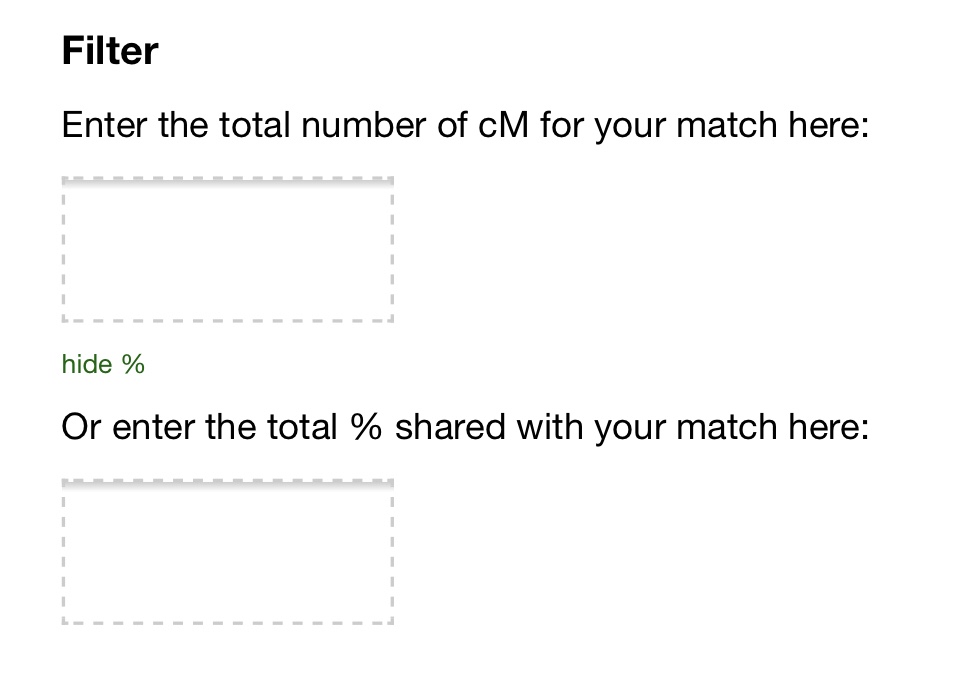
Just click on “show %” and it will open up a second box underneath for you to put your % in. The amount of cMs will automatically show up in the top box.
If you’re new to DNA, I highly recommend practicing using the DNApainter Shared cM tool to check out what relationships it gives you for the amount of cMs you share with your DNA matches. You can try it out for known matches to get the hang of it and then see if you can figure out how you and an unknown DNA match might be related! Try it out with some of your more distant matches, the ones you share less than 50cMs with to see how many more relationships are possible than with a closer match.


 Jennealogie
Leave a comment